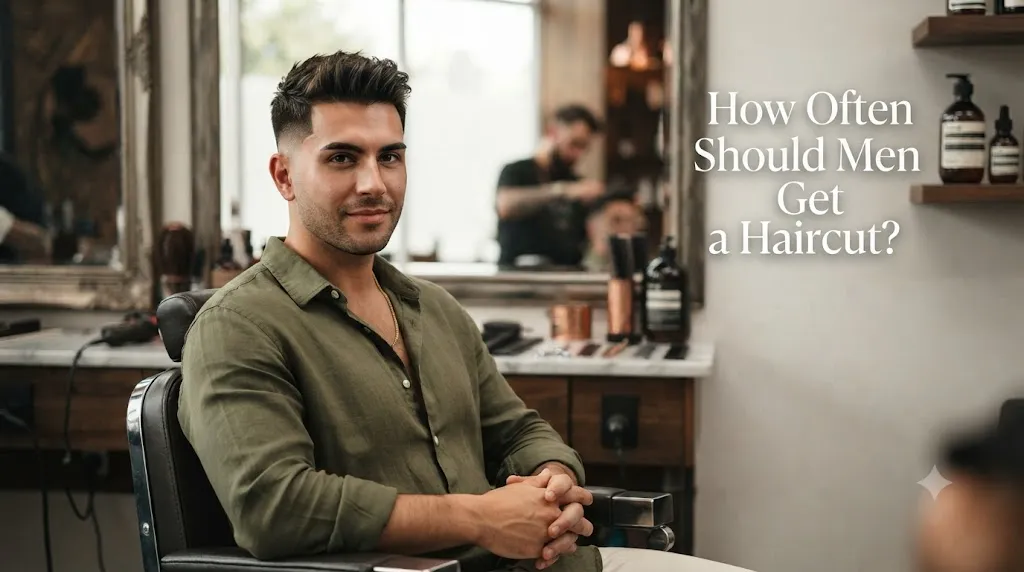
Thinning hair can be frustrating, especially when your favorite haircut no longer looks the same. Your hair may look flatter, your scalp may become more visible, and styling may feel harder than before. But the right haircut can completely change your appearance. Instead of trying to hide thinning hair, choosing a style that works with your current hair can make it look cleaner, thicker, and more natural.
In this guide, we will discuss the best haircuts for thinning hair, styles you should avoid, and simple tips to make your hair look fuller.
1. Why the Right Haircut Matters for Thinning Hair

Many men think thinning hair is only about losing density, but the haircut you choose also plays a major role in how your hair looks. The wrong style can highlight thin areas, while the right haircut can create balance and make your hair appear thicker.
When hair becomes thin, long hairstyles often fall flat and separate, making the scalp easier to see. Very sharp fades can also create too much contrast between the sides and the top, making thinning areas stand out.
The goal is not to completely hide hair loss. The goal is to choose a haircut that blends your hair naturally and gives your overall appearance a cleaner shape.
2. Understand Where Your Hair Is Thinning Before Choosing a Haircut
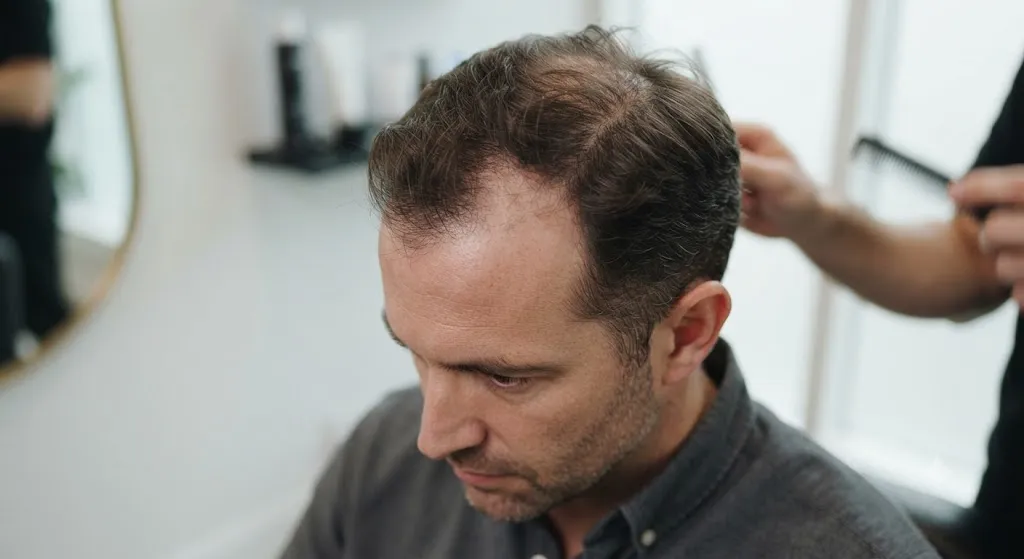
Before selecting a haircut, it is important to understand your hair loss pattern. Every man’s hair thinning is different, and the best hairstyle depends on where the thinning is happening.
If your hairline is receding, you need a haircut that balances your forehead and does not expose the temples too much. If your crown is thinning, you need a style that reduces visibility from the top. If your hair is thinning everywhere, shorter hairstyles usually create the most balanced appearance.
Understanding your hair condition helps you choose a haircut that actually works instead of following random trends.
3. Best Haircuts for Thinning Hair

The best haircuts for thinning hair are usually simple, textured, and balanced. These styles create movement and reduce the appearance of thin areas.
Shorter hairstyles work better because they prevent hair from separating and exposing too much scalp. Adding texture also creates the illusion of more volume.
4. Haircuts You Should Avoid If Your Hair Is Thinning

Not every popular haircut works well for thinning hair. Some styles can actually make the problem more noticeable.
Growing your hair too long may seem like a way to cover thin areas, but it often makes hair look flat and exposes more scalp. Comb overs usually attract attention toward thinning areas instead of hiding them.
Very high fades with thin hair on top can also create an uneven appearance because the contrast becomes too strong.
The best approach is to avoid hairstyles that make your hair look flat, separated, or overly styled.
5. What to Tell Your Barber for the Perfect Haircut

A good haircut depends on clear communication with your barber. Even if you know the style you want, explaining your hair concerns is important.
Tell your barber that you want a haircut that makes your hair look fuller. Ask them to keep texture on top and avoid removing too much thickness with thinning scissors.
A simple explanation like this can help:
“Keep the sides short but not too high, and add texture on top to create more volume.”
Bringing a reference photo is also helpful, but make sure the hairstyle matches your hair type and density.
6. How to Style Thinning Hair to Make It Look Thicker

Your haircut creates the foundation, but styling can make a big difference in the final look.
The best styling approach is to create texture and volume without making your hair heavy. Lightweight products like matte clay or volumizing powder are better choices because they keep hair separated naturally.
Avoid heavy gels and greasy pomades because they can make strands stick together and expose more scalp.
A blow dryer can also help lift hair from the roots and create a fuller appearance.
7. Choosing the Right Haircut Based on Your Hair Loss Stage
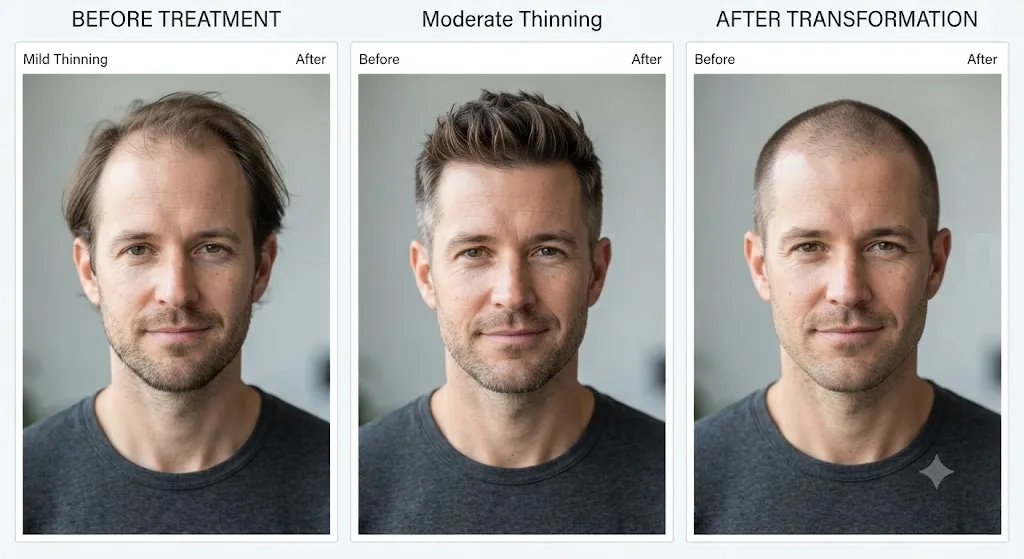
Your hairstyle should change as your hair changes. A haircut that worked years ago may not give the same results today.
For mild thinning, styles like textured crops and Ivy League haircuts can maintain a natural appearance.
For moderate thinning, crew cuts and short textured styles usually create a better balance.
For advanced hair loss, buzz cuts or shaved styles often provide the cleanest and most confident appearance because they create a uniform look.
The best haircut is always the one that matches your current hair situation.
Final Thought
Thinning hair does not mean you cannot look stylish. The key is choosing a haircut that works with your hair instead of fighting against it. A simple, clean, and well-balanced hairstyle can make a big difference in your confidence and overall appearance.