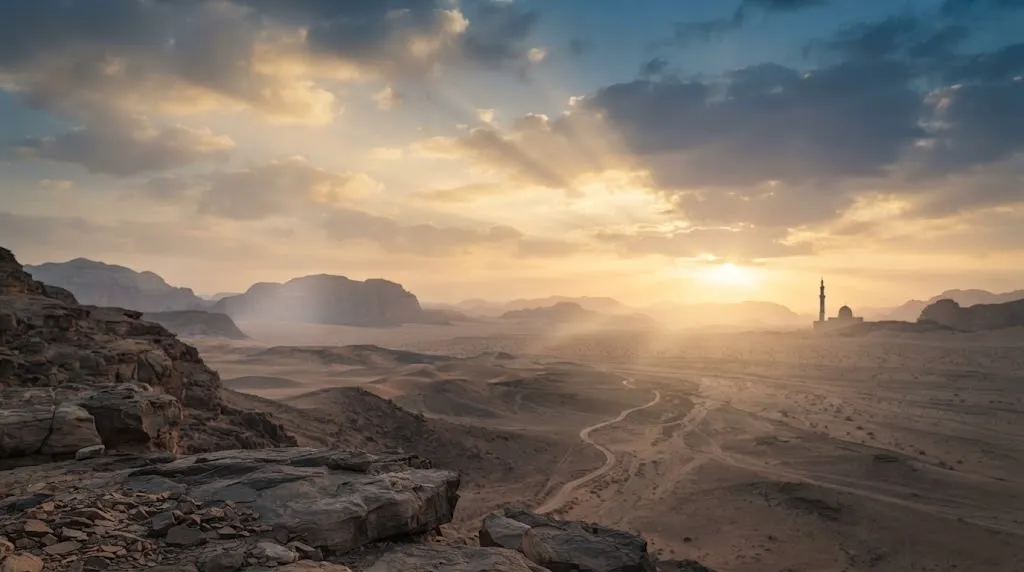
Have you ever stopped and asked yourself, “Why am I here?”
Why were we created? Why do we experience happiness and sadness, success and failure, love and loss? And what happens after this life ends?
Islam gives a clear and profound answer to these questions. According to the Qur’an, human life is not meaningless or accidental. We were created by Allah—the God of the universe—with a purpose. This world is a temporary journey, and our ultimate destination is the Hereafter.
We Were Created to Worship Allah
The central purpose of human life in Islam is beautifully stated in the Qur’an:
“I did not create jinn and humans except to worship Me.”
— Qur’an 51:56
Worship in Islam is much broader than prayer, fasting, or going to the mosque. These acts are essential forms of worship, but worship also includes living our entire lives in obedience to Allah.
When a person works honestly, cares for their parents, helps someone in need, treats others with kindness, earns lawful income, seeks beneficial knowledge, or even eats and sleeps with a good intention, these ordinary actions can become acts of worship.
The purpose of life, therefore, is not simply to accumulate wealth, achieve fame, or pursue temporary pleasures. It is to know Allah, worship Him, and live according to the guidance He has given us.
This World Is a Test
Islam teaches that this life is temporary and that we are being tested.
Allah says:
“He is the One Who created death and life in order to test which of you is best in deeds.”
— Qur’an 67:2
This understanding changes the way we look at life.
Success is not always measured by money, status, education, beauty, or social recognition. A person may appear successful in the eyes of the world but be spiritually distant from Allah. Another person may struggle financially or face hardship while remaining patient, grateful, and faithful—and therefore be tremendously successful in the sight of Allah.
Life contains tests of many kinds.
Sometimes the test is having little, and sometimes it is having much.
Sometimes the test is illness, and sometimes it is health.
Sometimes the test is failure, and sometimes it is success.
Even our blessings are tests. Wealth, family, intelligence, opportunities, and influence all come with responsibility.
Why Do We Suffer?
One of the most difficult questions people ask is: If Allah is merciful, why does suffering exist?
Islam does not teach that suffering means Allah has abandoned a person. Instead, difficulties can be tests, opportunities for patience, means of spiritual growth, or reminders that this world is not our permanent home.
Allah says:
“We will certainly test you with something of fear and hunger and a loss of wealth, lives, and crops. Give good news to those who patiently endure.”
— Qur’an 2:155
The believer is encouraged to remain patient during hardship while continuing to trust Allah.
This does not mean Islam asks us to ignore suffering or refuse to seek solutions. Muslims are encouraged to seek treatment, help those who are suffering, stand against injustice, and work to improve their circumstances.
But Islam also teaches that no difficulty is ultimately meaningless when it brings a person closer to Allah.
Life Is More Than This World
One of the most important teachings of Islam is that death is not the end.
Allah says:
“Every soul will taste death. Then to Us you will be returned.”
— Qur’an 29:57
This world is temporary. The Hereafter is permanent.
Islam teaches that after death, humanity will be resurrected and brought before Allah for judgment. Our beliefs, intentions, words, and actions matter.
Allah says:
“Whoever does an atom’s weight of good will see it, and whoever does an atom’s weight of evil will see it.”
— Qur’an 99:7–8
This gives human life enormous significance.
A small act of kindness may matter.
A sincere prayer may matter.
Helping a struggling person may matter.
Forgiving someone may matter.
Resisting an opportunity to do wrong may matter.
Even an action that nobody else notices can be known by Allah.
The Purpose Is Not Simply to “Be Happy”
Modern culture often tells us that the purpose of life is to maximize happiness, pleasure, success, or personal freedom.
Islam offers a deeper understanding.
Happiness is not wrong. Islam allows people to enjoy the blessings of this world. But temporary pleasure cannot be the ultimate purpose of existence because everything worldly eventually disappears.
Allah says:
“Know that the life of this world is only play, amusement, luxury, mutual boasting, and competition in wealth and children.”
— Qur’an 57:20
Islam teaches us to use the blessings of this world without allowing them to become our gods.
Money can be used to help others.
Knowledge can be used for good.
Power can be used with justice.
Family can become a source of love and mercy.
Time can be invested in good deeds.
The world is not necessarily something to abandon—it is something to use responsibly on the journey toward Allah.
Humans Have a Special Responsibility
Islam also teaches that human beings have a responsibility toward the earth and toward one another.
Allah says:
“Indeed, I am going to place a successive authority on earth.”
— Qur’an 2:30
Human beings have been given intelligence, choice, and responsibility. We are not merely consumers of the world. We are accountable for how we treat people, animals, nature, wealth, and the resources entrusted to us.
The meaning of life therefore includes living with justice, mercy, honesty, and responsibility.
A Muslim’s relationship with Allah should influence their relationship with creation.
Knowing Allah Brings the Heart Peace
People can spend years searching for fulfillment through possessions, relationships, achievements, entertainment, or recognition, yet still feel an emptiness inside.
Islam teaches that the human heart ultimately needs its Creator.
Allah says:
“Surely in the remembrance of Allah do hearts find comfort.”
— Qur’an 13:28
This does not mean that a believer will never feel sadness, anxiety, loneliness, or fear. Prophets themselves experienced grief and hardship.
Rather, Islam teaches that behind the difficulties of life there can be a deeper sense of trust: Allah knows, Allah sees, and Allah’s wisdom is greater than our understanding.
We Are Meant to Live With Hope
Perhaps one of the most beautiful aspects of the Islamic understanding of life is that it leaves room for hope.
Human beings make mistakes. We sin. We become distracted. We sometimes lose our way.
But Allah’s mercy is greater than our mistakes.
Allah says:
“Do not lose hope in Allah’s mercy. Surely Allah forgives all sins.”
— Qur’an 39:53
The door of repentance remains open.
A person’s past does not have to determine their future. Someone who turns sincerely back to Allah can begin again.
This means the meaning of life is not about becoming perfect overnight. It is about continually turning toward Allah, seeking forgiveness, improving ourselves, and striving to do what is right.
So, What Is the Meaning of Life?
From the Islamic perspective, the meaning of life can be understood through several connected purposes:
To worship Allah.
To recognize Him as our Creator and live in submission to Him.
To be tested.
To demonstrate through our choices how we respond to blessings, difficulties, temptation, and responsibility.
To live righteously.
To be honest, compassionate, just, patient, grateful, and beneficial to others.
To develop our relationship with Allah.
Through prayer, remembrance, Qur’an, repentance, gratitude, and sincere obedience.
To prepare for the Hereafter.
Because this temporary life leads to an eternal existence in which we will meet our Creator.
A Different Way of Looking at Life
When we understand life through Islam, ordinary moments can take on extraordinary meaning.
A parent caring for a child can be worship.
A person working honestly to support their family can be worship.
A student seeking beneficial knowledge can be worship.
A stranger helping someone can be worship.
A believer patiently enduring hardship can be worship.
A person quietly turning to Allah in the middle of the night can be worship.
The question is not merely, “What did I achieve in this life?”
A deeper question is:
“Did the life Allah gave me bring me closer to Him?”
One day, the things we spent our lives chasing may remain behind. Our possessions, status, titles, and worldly achievements will not accompany us into the grave.
What remains is our relationship with Allah and the deeds we sent ahead.
Conclusion: We Belong to Allah and We Return to Him
The Islamic answer to the meaning of life is ultimately a journey of returning to our Creator.
Allah says:
“Indeed, we belong to Allah, and indeed to Him we will return.”
— Qur’an 2:156
We came from Allah by His creation, we live by His permission, and eventually we will return to Him.
That gives life both purpose and direction.
We are here not simply to exist, but to worship.
Not simply to consume, but to serve.
Not simply to chase the temporary world, but to prepare for eternity.
Not simply to avoid hardship, but to respond to it with faith and patience.
And not simply to seek the approval of people, but to seek the pleasure of Allah.
Perhaps the most important question we can ask ourselves is not “What can this world give me?”
It is:
“What am I doing with the life that Allah has entrusted to me?”
Because according to Islam, this life is not the final destination.
It is the journey.